drive&control auf deutsch | Imprint | Terms of Use | Contact | www.boschrexroth.com 

Nothing stays the same

October 2010

This is how a participant at a sector conference in summer 2010 put the market for machinery and plant construction in a nutshell. The transformation itself is less surprising than its enormous speed. And that is a challenge for the entire industry.

Change is as much a part of machinery and plant construction as the thread is part of a screw. However, the economic crisis has significantly accelerated this process. Though the crisis has not managed to pull the rug out from under the feet of industry, it has considerably stepped up the pace of transformation. Some developments that were thought to be feasible in a period of 10 to 15 years now take place within 18 or 20 months. Markets and their growth prospects are constantly shifting. A realignment in the importance of industrial segments and sectors is emerging.

Technologies continue to develop at breakneck speed. And, finally, the requirements and demand behavior of customers also change substantially as a consequence of that. These new conditions demand a high degree of adaptability, flexibility and speed on the part of machine manufacturers and suppliers.

Shifting markets

The topography of the global markets has permanently changed. Developments that were already emerging before the crisis have accelerated. This applies, for instance, to the regional distribution of market volumes between the established markets in Europe, North America and Japan and the Asian-Pacific region (APAC). The markets in North America and Europe will show lower growth rates. Based on the expected dynamics, the Asian-Pacific region will hold absolutely the greatest market potential in future. This means the chances are good that early investments and intensive long-term commitments in these growth markets will pay off well. Rexroth, for example, considerably increased its sales in China and India up to the two-digit range, even in crisis year 2009. Overall Asia and Australia contributed nearly a quarter of the business volume last year as compared to 16 percent before the crisis. Many suppliers will boost their commitments in the Asian markets even more in future and build up local value added. For Rexroth this includes a TechCenter in Korea as well as greater regionalization of development capacity so as to offer customers and users even more know-how and application support at the local level.


Shift in importance of segments and sectors

The rapid transformation has permanently altered the opportunities and potential within sectors. The mechanical engineering industry, for instance, has nearly 40 specific sectors characterized by a large and very heterogeneous spectrum with very different prospects in some cases. The printing machine and machine tool sectors develop differently from the assembly and handling or solar segment, for example. All market players are compelled to actively gear themselves to this new conditional framework and the growth prospects as well as adapt their products and services accordingly. Those who are able to identify the winners among their clientele and focus their efforts on them will themselves be among the future winners. There are definitely winners as well in sectors that generally grow more slowly. Some subapplications or subsegments there are undergoing significantly faster growth than the overall sector they belong to.

Changing technologies

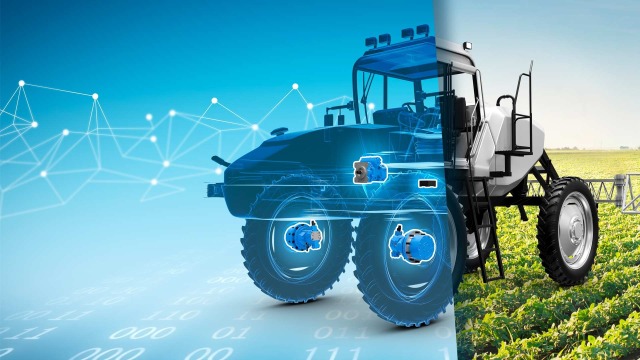
The current economic and ecological challenges go beyond the traditional limits of engineering. New overall functions require an intelligent, interdisciplinary interlinkage of technologies. One example of this is the electrification of hydraulics. Rexroth is blazing new trails when it comes to combining hydraulics and electrics. In connection with pressure generation variable-speed pump drives hold great potential for saving energy costs and reducing noise as well as substantially diminishing the hydraulic power loss. With standard motors and servomotors it is possible to save 40 to 70 percent in energy as compared to conventional power units and reduce mean noise emissions by 10 to 20 decibels. Legal regulations, such as Tier 4 final for mobile working machines, also require radically new approaches. An example of this is Diesel Hydraulic Control. This system links the digital electronics of the diesel engine control to the hydraulic control and thus significantly reduces fuel consumption at
constant machine dynamics.

Customers demand lower costs and more flexibility

More than ever customers are primarily concerned with costs and liquidity, sales growth through new products and markets as well as securing their future by means of rapid response capacity. Cost pressure has grown enormously in all industries while investments in machines and automation have to pay off even more quickly. Industrial end users invest in new technologies only if the return on investment is adequate and productivity rises. Additional expenditures, such as for exceptionally energy-efficient solutions, have to amortize themselves within one to two years, instead of in five years as before. Rexroth, too, clearly sees the impacts of this altered customer behavior, as outlined by President Dr. Karl Tragl: “Clients frequently do not order until they get their own order from the end customer. For us that means we have to be faster and more flexible.” Consequently this also means many suppliers have to be prepared for greater fluctuations in incoming orders and guarantee faster response times for customer inquiries and technical support.

Organization and strategy follow the market

More and more machinery and production system manufacturers are going over to comprehensive technological solutions from a single source. Bosch Rexroth is tackling these changes and actively shaping them with a new structure focused even more intensively on markets and sectors. Today the company is no longer set up on the basis of its own technology portfolio (hydraulics, electrics, linear and assembly technology, pneumatics), but on the basis of the market segments and sectors served. This results in consistent organizational implementation of the Drive & Control approach.
The varying requirements and business models in the target markets are covered by three cross-technology business units:
Mobile Applications encompass components, modules and system solutions for mobile working machines used for construction, forestry, agriculture and other areas of application.
Industrial Applications relate to stationary machinery and plant construction. This sector is subject to rapid technological change and characterized by an increasing demand for cross-technology solutions. That is why the company has grouped all drive and control technologies necessary for these market segments in the Industrial Applications Business Unit.
Renewable Energies bundle gearbox and drive solutions for the wind energy as well as the marine energy sector, which is becoming increasingly important for the future.

Comments are closed.