drive&control auf deutsch | Imprint | Terms of Use | Contact | www.boschrexroth.com 

More than just ON and OFF

There could be no automation without controls. But what do controls actually do and how do they work?

“On” or “off” — those are the states that technical products can assume in the simplest case. A control is a device that alternates between these states, following a predetermined rule. This rule decides how a certain output variable (e.g. “switch on heating”) will behave in response to a certain input variable (“outdoor temperature”).

Know-how 1

Control categories

The technical embodiment of this rule is referred to as a control unit. The part of the product influenced by the control unit is called the controlled object. Electrical or electromagnetic energy usually serves as the carrier medium for the information; liquids and gases are less frequently used. One differentiates between manual and automatic controls, depending on whether the input variables are provided by hand or by an automatic device.
Know-how 2

Depiction of control assignment


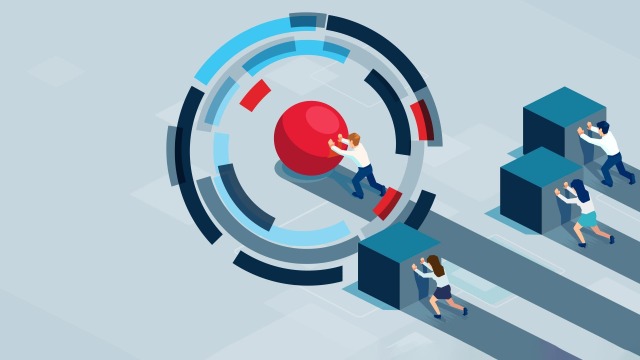
Control engineering includes the design and building of controls. It is a sub-discipline of automation engineering.As opposed to open-loop control as described above, closed-loop regulators consider feedback for the output, which is applied to an input. One simple example is the thermostat that switches the furnace off when room temperature rises. The boundaries between open-loop controls and closed-loop regulators are becoming less and less distinct. The two figures show what kinds of controls there are and how they carry out certain tasks.

Additional information:

www.boschrexroth.com/academy
www.boschrexroth.com/catalog
www.control-city.com

The Rexroth Drive & Control Academy offers special training programs and media all about the topics of drives, control and motion.

drive-control@boschrexroth.de

Comments are closed.