drive&control auf deutsch | Imprint | Terms of Use | Contact | www.boschrexroth.com 

Mobile control

July 2011

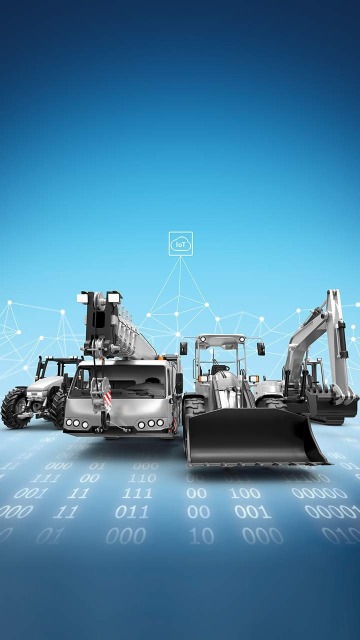
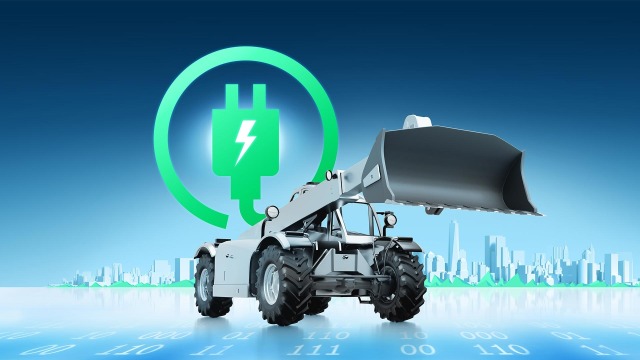
Wherever it’s necessary to dig, lift or tow, that’s where mobile working machines are needed. A look inside will show that hydraulic power is behind the many different movements. But how are these motions coordinated, and which mobile control concept is suitable for which application?

Mobile hydraulic systems have to be not only rugged and low in maintenance. They also have to satisfy the special needs of mobile use. In mobile work vehicles these systems may occupy only a minimum of space and must weigh as little as possible, but should nonetheless deliver high power and performance. The same is true for the controls. Mobile controls, when compared with their industrial counterparts, have to carry out a large number of functions, in limited space, and at low weight.

Fundamentally, two different hydraulic circuits are used in mobile control concepts: open and closed circuits. The closed circuit comprises essentially a pump, a motor and two pipes that join them. This configuration is suitable for individual tasks such as propulsion power or a winch drive. A separate circuit is required for every additional task.

The highly varied functionality of mobile working machines makes the open circuit especially suitable here. The pump draws the fluid from a tank as needed and moves it into a pipe which, by way of one or more multi-port valves, serves many different using units.


In everyday use, three types of controls will be employed in open circuits:

Throttle control
Load sensing control
Flow-sharing control valves

Comments are closed.